

6/20 Bundaroo Street
Bowral, NSW, 2576
Australia
Ph: +61 488 260 004
2 Carpenter Road East
Tāmaki Auckland, 2013
New Zealand
Ph: +64 21 656 058
Second-hand rollforming lines for purlins, steel framing, corrugate and roofing profiles. Most come from fabricators who have upgraded to a new line, so the machines were in production until recently and often come with the decoiler, stacker or spare tooling they ran with.
Each listing shows the profile range, what is included, location, condition notes from the owner and the price ex GST. Freight and rigging are quoted separately so you know the landed cost before you commit.
Looking for a profile you cannot see here? Tell us what you need and we will let you know when one comes up.
Key Features of
Preowned Rollformers
Profile and material range
Confirm the sections and gauges the tooling actually runs, not what it was built for.
Tooling condition
Ask when it was last retooled or reground and look at the roll faces in the photos.
What is included
Decoiler, stacker, spare tooling and manuals change the landed cost. Each listing says what comes with the machine.
Drive and controls
Chain-driven lines are simple to maintain. Check the control system is supported and that electrical drawings exist.
Power and footprint
Voltage, phase and line length against your shop before you commit.
Removal
Who dismantles, who loads, and whether a crane is needed. Freight and rigging are at the buyer’s cost on every listing.


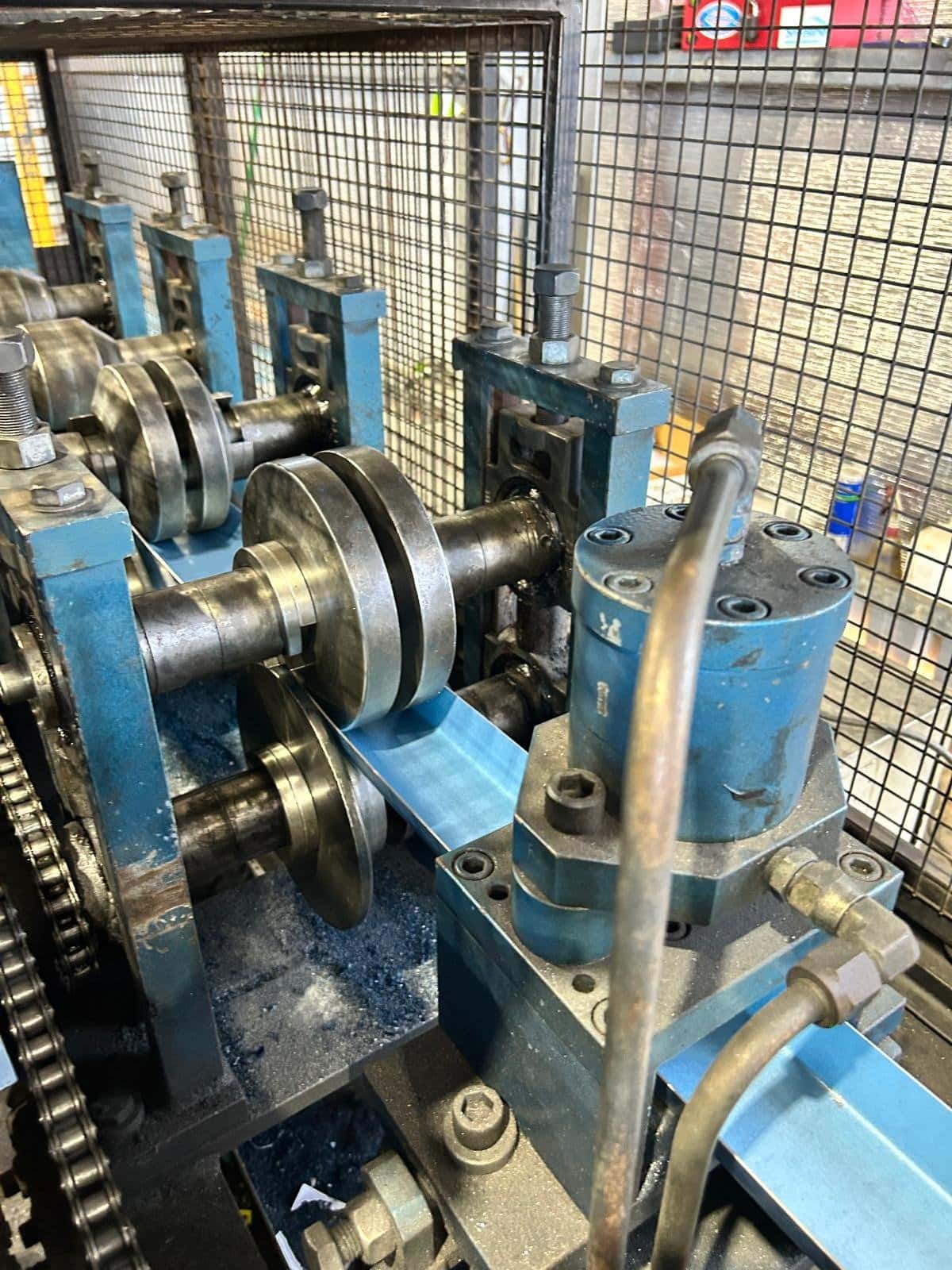
Compare Our Preowned Rollformers
| Criteria | Hayes Variable C/Z Purlin Line, 100/12 to 300/24, with Decoiler | Hayes Corrugate Rollformer, Recently Retooled | Able Engineering Stud, Plate and Noggin Rollformer (2010) |
|---|
Maintenance and Reliability Program
Buying a second-hand machine does not mean inheriting someone else’s maintenance history. Every preowned machine we sell can go straight onto Total Reliability, our maintenance programme, so it is looked after the same way as a new line from day one.
Step 1.
Recommissioning check
When the machine lands, our technician sets it up, checks drives, hydraulics and safety circuits, and runs first product with your operators.
Step 2.
Baseline condition report
We log the machine on Total Reliability with a baseline inspection, so wear is tracked from the start rather than guessed at later.
Step 3.
Scheduled servicing
Routine inspections, oil sampling and critical spares planning on the same programme we run for new machines.