



Your Guide to Rollforming & Folding Innovation
Enquiries have continued to roll in this past month, with new leads coming in from New Zealand and across Australia. We’re taking that as a good sign things are moving in the right direction, and thank you to everyone who’s picked up the phone.
It’s a big month for new machines as well. CIDAN launched their fully electric E-POWER at METALCON in Orlando, and EuroBLECH opens in Hanover on the 20th with two more launches from the group.
Also in this edition: a couple of recent guarding jobs, four pre-loved rollformers (two of them new to the list), and a new newsletter just for pre-owned stock.
CIDAN Goes Electric: the New E-POWER
Didn’t get to METALCON in Orlando last week? CIDAN launched the E-POWER there, their first fully electric folder.
It’s a double folder in 3200mm and 4100mm working lengths, and there are no hydraulics in it at all. Everything runs on servo drives, so there’s no hydraulic noise and no oil to change. It even folds faster too, because like all other Thalmanns it moves several axes at once instead of waiting between each step, but with the added acceleration of electric power.
Also launching at EuroBLECH this month is Thalmann’s new D-POWER. With a servo driven hydraulic setup, it uses 80% less energy for the same performance compared to the existing Thalmann TD range.
The power these machines run on is getting cleaner as well. Renewables made up 88.5% of New Zealand’s electricity in 2025 and 42.9% of Australia’s main grid, with the government targeting 82% by 2030.
I think we’ll see a lot more electrification across this product category in the coming years.
EuroBLECH: Two Launches From the CIDAN Group
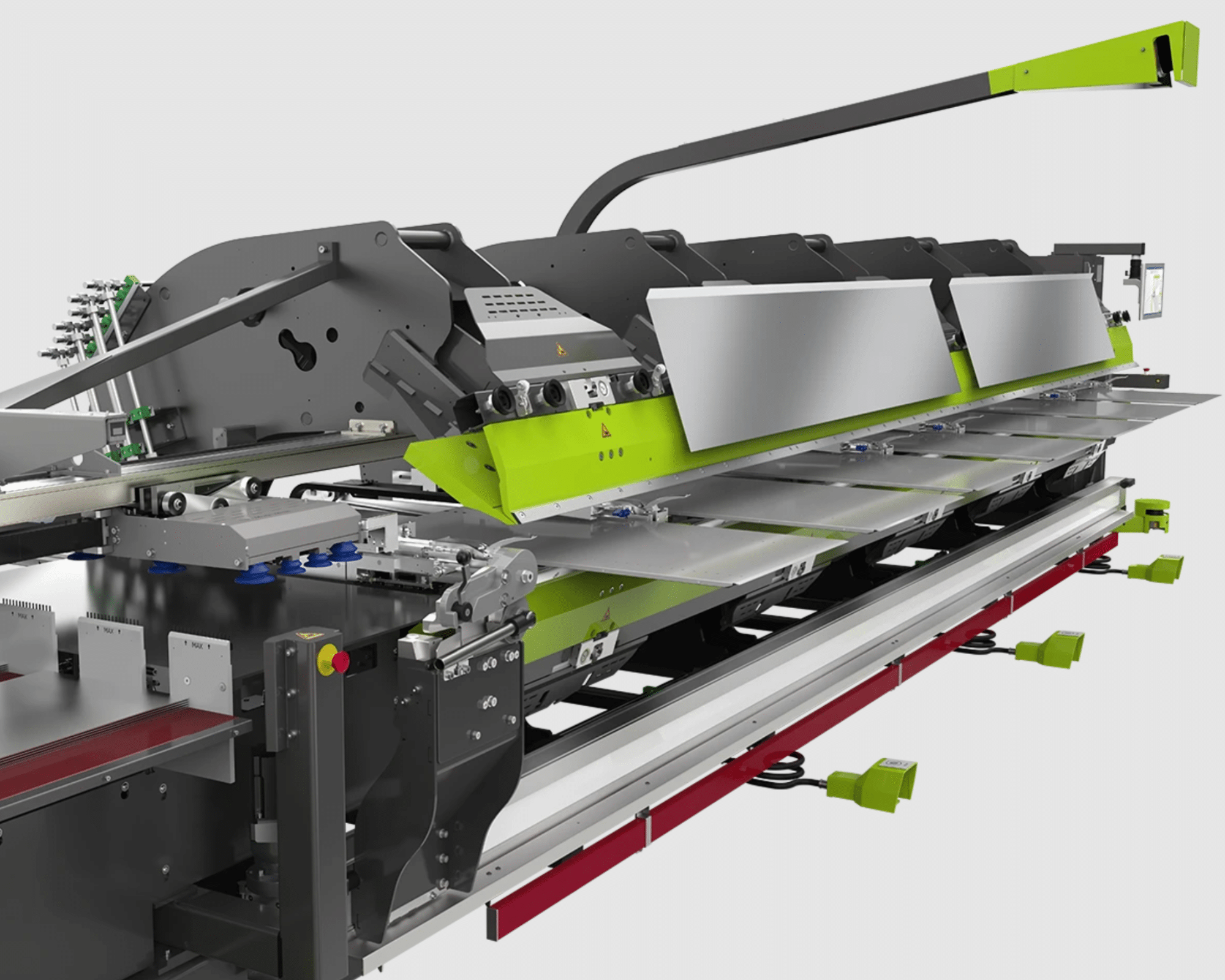
EuroBLECH runs from 20 to 23 October in Hanover, and the CIDAN Machinery Group is in Hall 11, Stand D154. Two machines that were shown as prototypes at Dach+Holz in Cologne back in February get their official launch there.
Thalmann D-POWER double folder. Thalmann have put a new servo drive in it that they rate at the same performance and speed as the TD range but using 80% less energy. The folding beam now retracts more than 200mm, almost doubling the horizontal folding clearance of the TD, and the multi-head side loader with double-sheet detection can run off your own loading table.
Forstner COILCELL. This is a 2-tonne coil handling system built as a two-level tower with a lift in it, so your coils go up rather than across the floor. You can start with manual handling and add automation step by step, and coils load with a pallet truck, so you don’t need a crane or forklift. Forstner are pitching it at smaller and growing shops as an affordable way into coil handling.
The CIDAN FX we featured last month is on the stand as well, running nuLINK control. If Hanover’s not on the cards, CIDAN’s Open House in Feldkirch, Austria is on 26 and 27 November.
Custom Guarding: Built and Installed by Our Own Team
We design, build and install all of our own guarding in Australia and New Zealand, to AS/NZS 4024. Before we design anything we look at how your team actually works the machine, so the guarding protects people without getting in the way of the job.
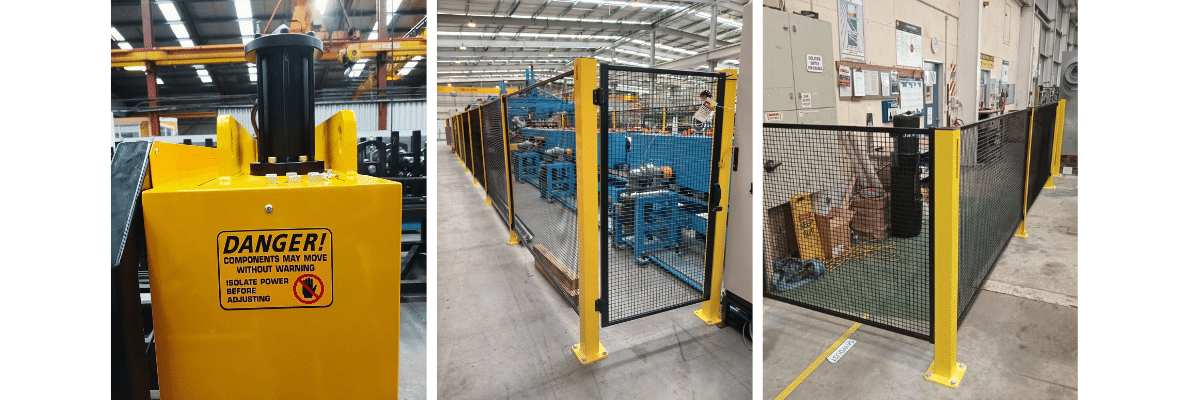
A couple of recent ones: the guarding on one of our customers’ older machines no longer met current standards, so we reduced the mesh size from 40mm to 25mm and increased the overall height of the guard panels (top left). On another job we built a full interlocked guarding surround for a decoiler.
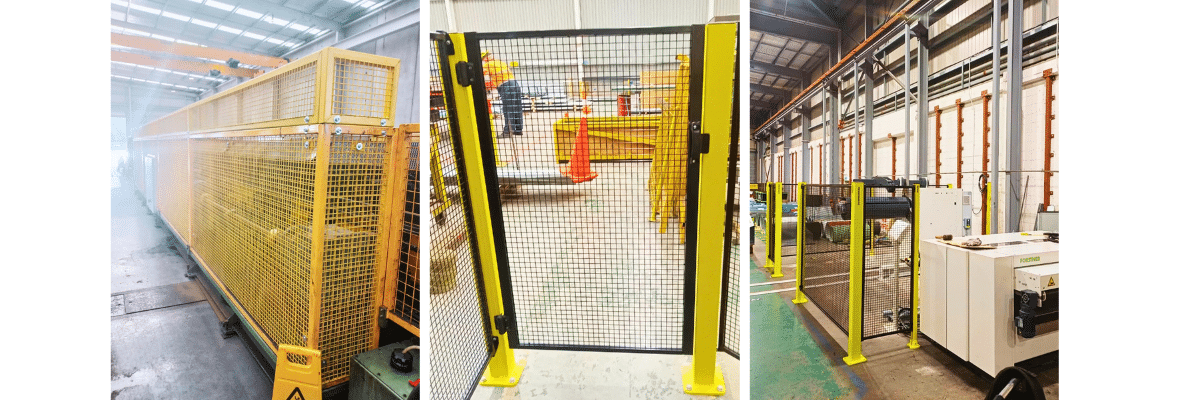
The standard that sets safety distances for guarding was reissued last year, so if yours went in a while ago it’s worth a check. This month’s maintenance tip covers what to look at.
Preowned Machines: Two New, Two Still on the Floor
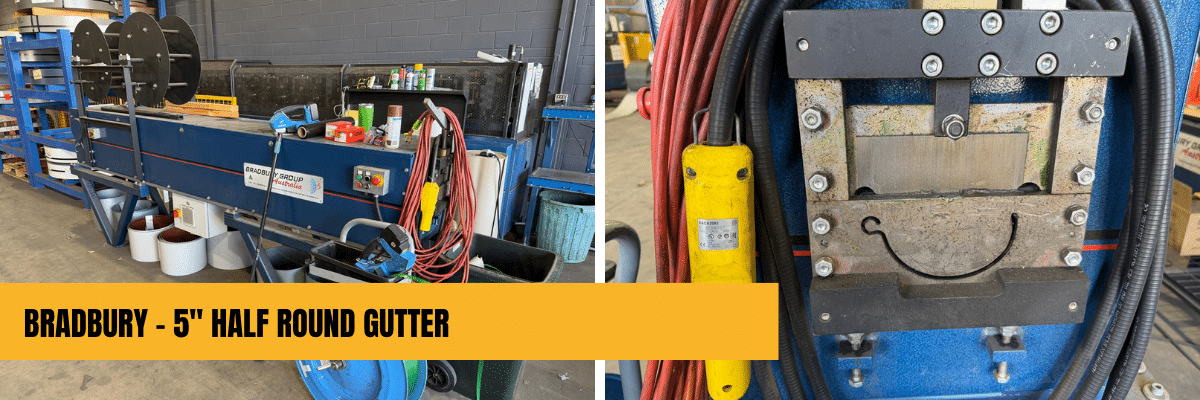
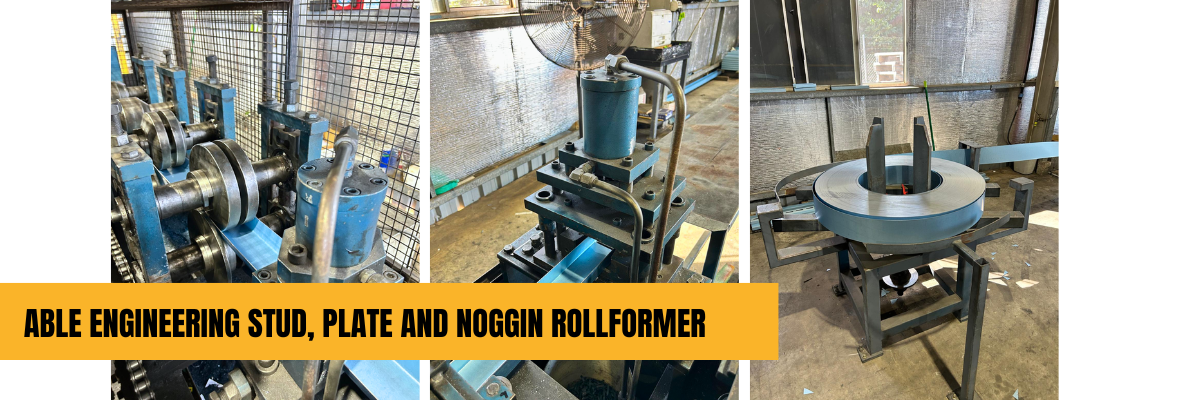
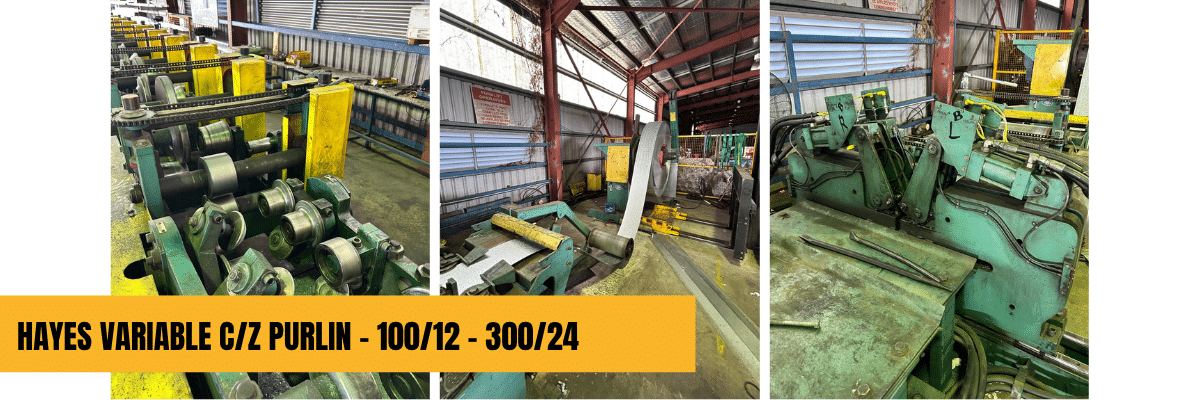
Two more pre-loved rollformers have come in, both in Darwin, and both are going on the website now.
New to the list:
✓ Hayes corrugate rollformer. Rollformer only, no decoiler or stacker. Recently retooled.
✓ Able Engineering stud, plate and noggin rollformer, 2010. Runs 76mm standard channel.
Still available:
✓ Bradbury 5″ half round gutter machine.
✓ Hayes Variable C/Z Purlin, 100/12 to 300/24. Precut, includes single decoiler.
If any of these is of interest, call me and I will tell you honestly what condition it is in and what it has done.
Why buy through us?
1. Technical inspection by qualified service technicians
2. Full transparency on machine condition and history
3. Fast delivery compared to new equipment lead times
* All equipment may be subject to location embargoes (owners won’t sell to the guy down the road).
New: Our Pre-Owned Newsletter
Machines have been moving quickly, so we’ve started a separate newsletter just for pre-owned stock. Sign up and we’ll let you know when something comes in.
Sign up to the pre-owned newsletter / WhatsApp
Planning your 2027 equipment strategy? We are here to help you make informed decisions around capacity, capability, and efficiency.
Email directly: solutions@totalrollforming.com
Maintenance Tip: Check Your Guarding Against the Standard
AS/NZS 4024.1801 is the part of the machine safety standard that sets how far guarding has to keep people from moving parts. It was reissued last year to line up with the international version (ISO 13857:2019), and it’s a joint standard, so it’s the same on both sides of the Tasman. The distances themselves didn’t change, but if your guarding hasn’t been checked against them in a while, now’s a good time.
In short, the bigger the gaps in the mesh, the greater distance the guard needs to be from moving parts (hazards). The guard also has to be high enough that nobody can reach over it.
Want to check your compliance? Grab a tape measure and go round each guarded machine:
1. Measure the mesh opening, then the distance from the mesh to the nearest moving part / hazard. For square mesh, a 25mm opening needs the moving part at least 120mm back, a 40mm opening at least 200mm, and anything over 40mm (up to 120mm) needs 850mm.
2. Check the height. Guarding under 1400mm high shouldn’t be relied on without other safety measures.
3. With the machine stopped, open each interlocked gate and try to start it. It shouldn’t start. Look for tape, cable ties or spare actuators on the switches, because that means someone has bypassed it.
4. Keep a record of what you checked and when in case you’re ever audited.
If the measurements don’t seem correct, we would be happy to come and do a site audit with you, so give us a call.


